

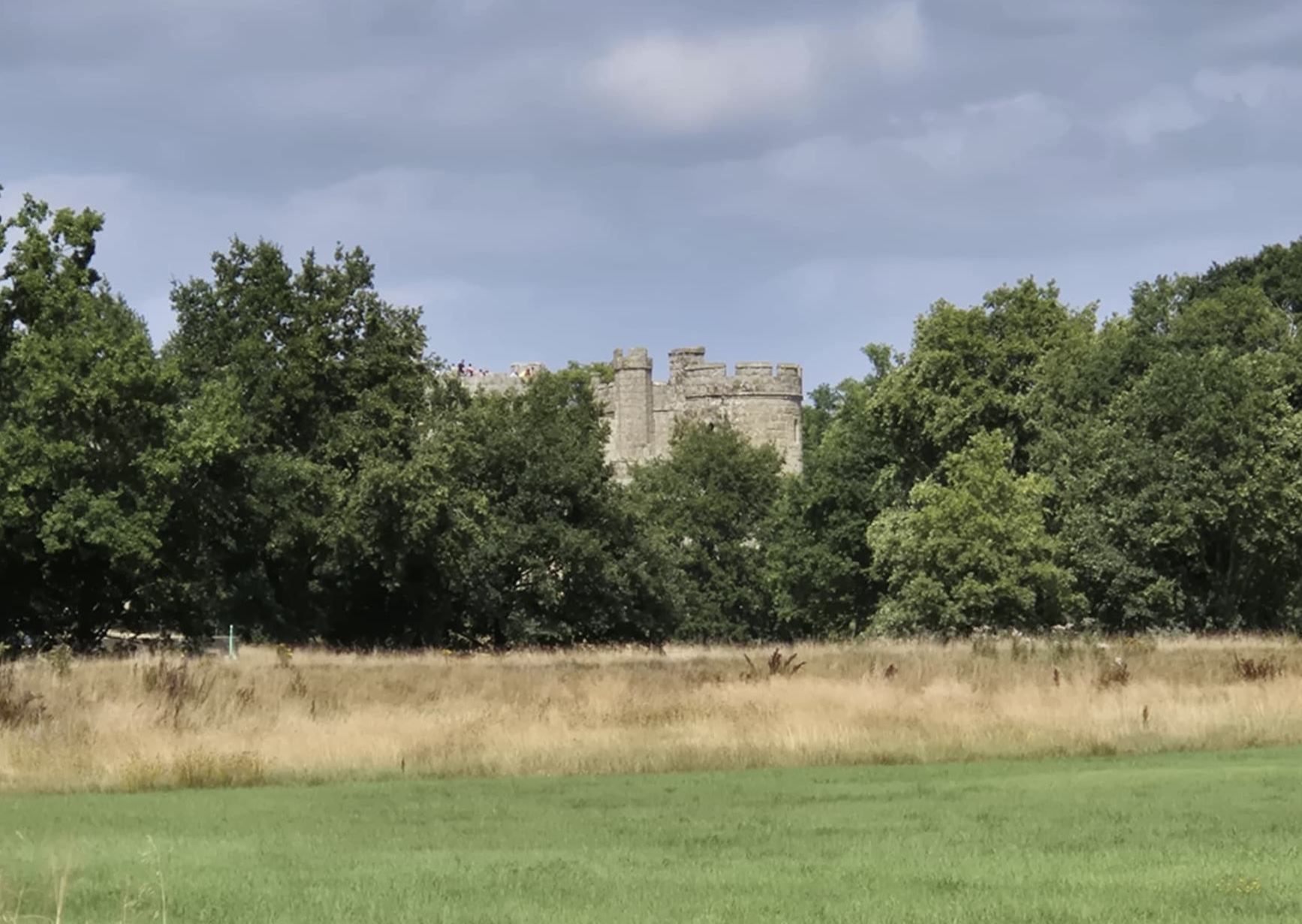
When Nathalie Cohen from the National Trust (NT) gave the Society a talk back in April she invited us to visit the summer dig at Bodiam Castle. Seven of us joined her for a tour.
Nathalie was called ‘The Boss’ by her colleagues as we walked around the digs, so we were lucky to have her – she was certainly very knowledgeable.
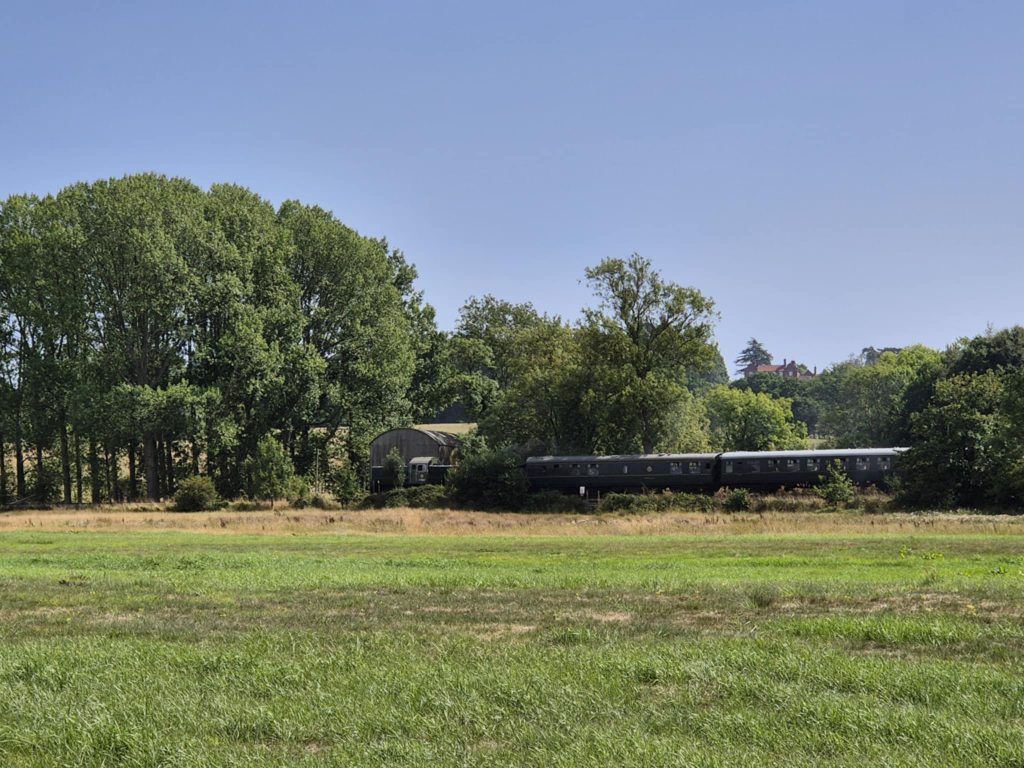
From the castle we walked along the road to begin our visit. We waved to the passengers on the heritage train as it passed by.
We visited four trenches, there were two more in the castle grounds which weren’t open to the public. Unfortunately, as the ground was so hard (because of the very warm, dry weather and the fact they had only been digging for a week), two pits were disappointing and for the time being work had stopped. The other two were being worked on, but there wasn’t much to report. A few pieces of Roman pottery and building material. Hopefully more artefacts will be found.
But no matter, as Nathalie gave us a fascinating overview of the history of the site!
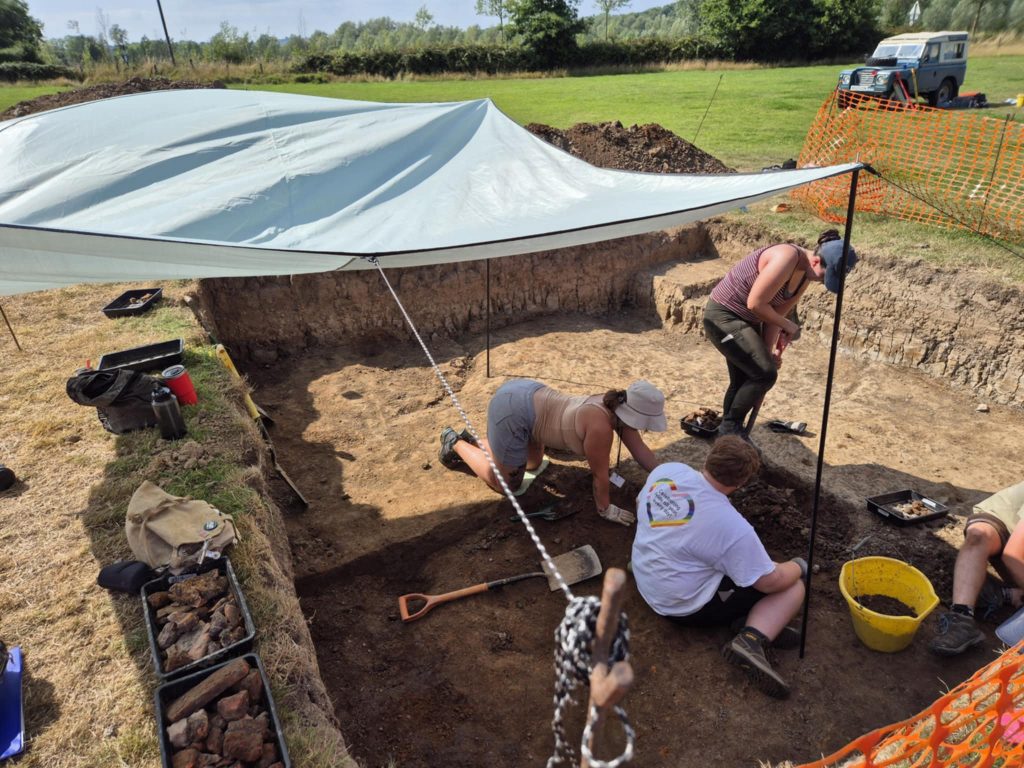
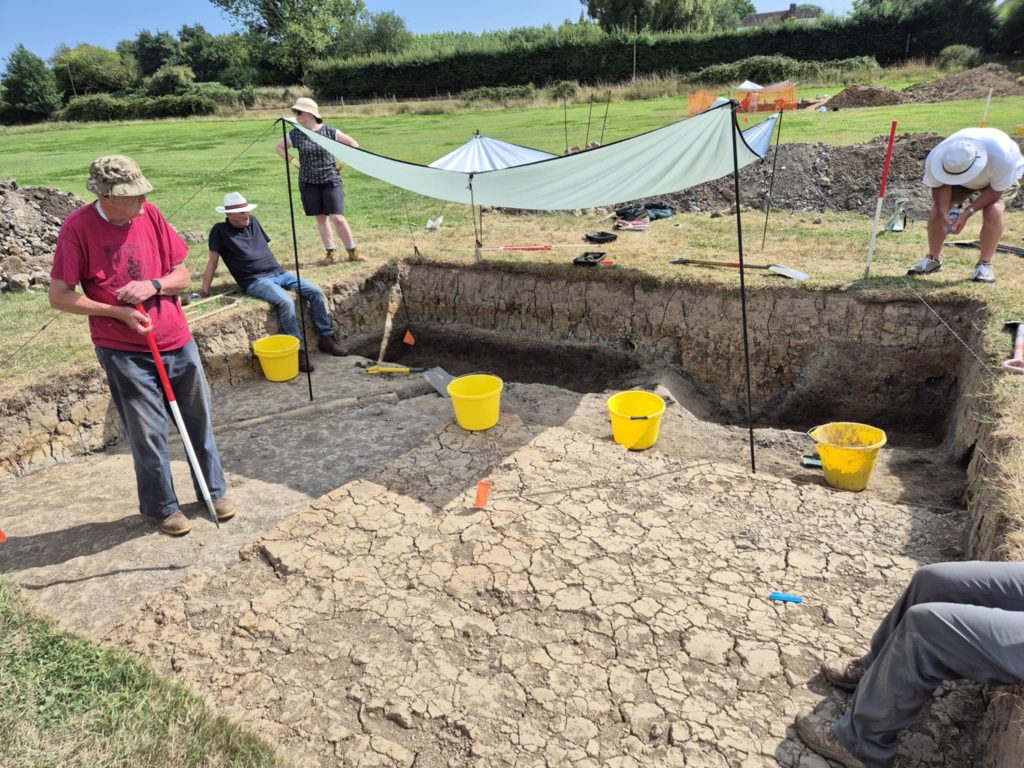
We could still see where the river tracked before it had been moved by Sir Edward Dallingridge to take it nearer the castle when he built it in 1385; back then the river Rother was navigable to Bodiam. In Roman times, the NT think the river had a different course to the 14th century. They were digging for traces of this river bed and also indications of day-to-day Roman life. A few bits and pieces had been found but mostly waste building material, a roof tile which was possibly from where the smelting industry had been and purposely destroyed.
Back in the 1960s Guinness had owned this field (and the one across the road) and they were hop gardens of course! That must have been a beautiful sight. These were the only hop gardens that Guinness owned in England. There was evidence of Guinness putting drainage pipes in two of the pits.
The whole field is/was subject to flooding. Because of this, NT didn’t expect to find any high status dwellings. If they’re anywhere they would be on higher ground – clearly, no digging there. Also they can’t dig too close to the railway line because of the spoils dumped when the line was being built.
We had a lovely sunny day, dry underfoot and it was enjoyable, especially with the castle in view. The archaeologists are planning to return for a third year in 2026, so it might be worth another visit.
Our thanks to Nathalie and everyone else who organised our visit and to Christine who contributed this report.